Current Clemency-Like System Gives No Meaningful Opportunity to Earn Parole By Demonstrating Maturity, Rehabilitation
BALTIMORE – Challenging as unconstitutional the statute granting Maryland governors exclusive, standardless authority to decide their fate in parole, individuals sentenced to parole-eligible life sentences as youths, assisted by the American Civil Liberties Union (ACLU) of Maryland, today urged a federal court to permanently block the state’s current parole system for lifers. Calvin McNeill, Nathaniel Foster, Kenneth Tucker and the Maryland Restorative Justice Initiative have asked the federal district court in MRJI v. Hogan to issue a permanent injunction blocking enforcement of the statute placing blanket, unreviewable power to grant or deny parole in the hands of the state’s highest elected official, the Governor, arguing that the statute renders Maryland’s scheme one of executive clemency rather than parole.
The Supreme Court and other courts around the country have ruled that executive clemency – which is rare, ad hoc, standardless and unreviewable – is not a substitute for parole, and that it categorically fails to satisfy constitutional requirements that youthful offenders be afforded a meaningful and realistic opportunity for release.
“The system originally had a parole expectation built into it: Starting at maximum security, progressing to medium, minimum, pre-release, work release, family leaves, and eventually parole,” said Walter Lomax, Director of the Maryland Restorative Justice Initiative. “The
spirit of Maryland’s parole process has been broken – with people serving decades beyond when they are recommended for parole – and it is time to fix it.”
The Supreme Court has repeatedly ruled that the Eighth Amendment requires that, in all but the most exceptional cases, those who offend as youths receive a meaningful opportunity for release based on their demonstrated maturity and rehabilitation. Yet Maryland’s scheme allows the Governor to refuse parole to a juvenile offender for any reason or no reason, even after the Parole Commission has determined that—after decades of incarceration, hearings, risk assessments, and full consideration by the entire Parole Commission— the individual has earned it. In this way, Maryland’s scheme operates as an ad hoc system of clemency that fails the U.S. Supreme Court’s standard.
That is why the Maryland Restorative Justice Initiative, Mr. McNeill, Mr. Foster, and Mr. Tucker are asking a federal court to rule “as a matter of law” that the statute empowering the Governor to be the sole arbiter of parole decisions for juvenile lifers is unconstitutional.
“Each day that passes under this unconstitutional scheme is a day that people who have done everything right in prison are subjected to a punishment that is outside of the state’s power to impose,” said Sonia Kumar, an ACLU staff attorney. “It has now been years since the Supreme Court’s rulings on this subject. All that juvenile lifers and their families are asking for is a ruling that confirms that youths who turn their lives around in prison are entitled to a fair chance.”
The ACLU represents the Maryland Restorative Justice Initiative, a prisoners' rights organization that includes juvenile lifers and their families among its members, as well as Mr. McNeill, Mr. Foster, and Mr. Tucker, who were subjected to mandatory life sentences for offenses committed decades ago when they were teens. The lawsuit, MRJI v. Hogan, alleges that no juvenile lifer has been paroled in more than two decades as a result of Maryland’s unconstitutional system.
In an early victory, U.S. District Court Judge Ellen Lipton Hollander in 2017 rejected the State’s effort to have the lawsuit dismissed. In a lengthy opinion tracing the history of Maryland’s parole scheme and the plaintiffs’ allegations, Judge Hollander observed:
“A parole procedure does little in the way of actually making parole a possibility when the decision of whether to commute a sentence is entirely up to [the governor’s] discretion and the political tides of the day. And, a system of executive clemency, which lacks governing standards, does not constitute a meaningful opportunity to obtain release for Juvenile Offenders. …"
The plaintiffs are represented by pro bono attorneys Mary Borja, Richard Simpson, and Gary Ward of Wiley Rein LLP, Barry Fleishman and Gregor Seador of Shapiro, Lifshitz & Schram, as well as ACLU of Maryland Legal Director Deborah Jeon and Staff Attorney Sonia Kumar.
###
Related Content
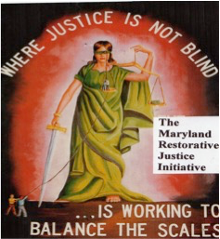
Settlement Reached in Lawsuit Defending Constitutional Rights of Marylanders Sentenced to Life with Parole as Children
New Thinking Freely Podcast Episode “Racism, Algorithms, and the Fight for Redemption” from the ACLU of Maryland

Dara Johnson
Stay Informed
Sign up to be the first to hear about how to take action.
By completing this form, I agree to receive occasional emails per the terms of the ACLU’s privacy statement.
By completing this form, I agree to receive occasional emails per the terms of the ACLU’s privacy statement.