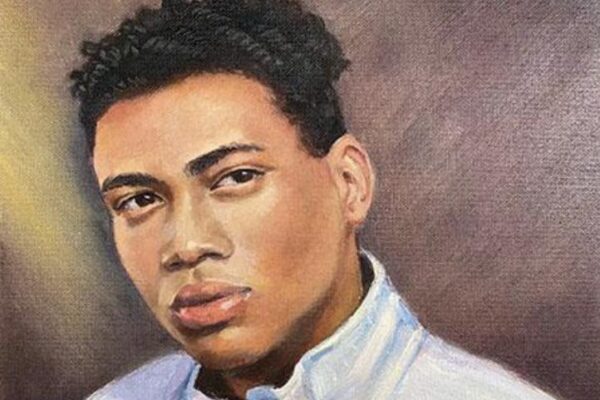
Dr. David Fowler, the chief medical examiner of Maryland, is set to testify in George Floyd’s case for justice. Sadly, in 2018, he had declared that Anton Black’s killing was “accidental,” despite striking similarities between his killing and that of George’s.

In fact, there are many similarities between the lives of George Floyd and Anton Black.

Anton Black

They were known for having big dreams. When 46-year-old George Floyd was a teenager, he wanted to be a pro athlete. He was already a star athlete in high school. Similarly, 19-year-old Anton Black was a champion athlete in his high school. But what he wanted to do most was to model and act. He was young and had many interests. His possibilities were endless.

Children looked up to George Floyd. He was a mentor in his community. While his life had ups and downs, he learned from his mistakes. People respected him more because he overcame obstacles.

Anton Black was great with kids too. In fact, his young nieces and nephews adored him. He had a child on the way and would’ve made a good father. George Floyd was a father, too.

Most importantly, George Floyd and Anton Black were loved.

Read the full opinion piece


Rene' C. Swafford, Esq.'s full opinion piece was published in The Talbot Spy on April 16, 2021.
Related Content

Campaign
Aug 2022
Anton Black
  • Racial Justice|
  • +3 Issues

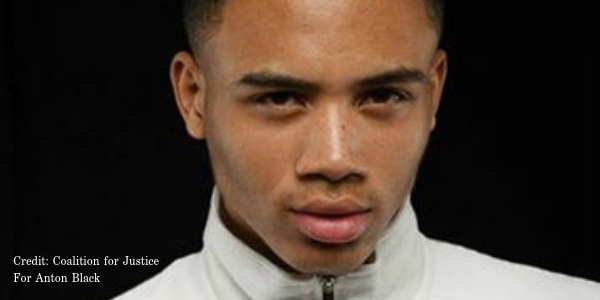
Accountability for Police Killing Anton Black

Police officers on Maryland's Eastern Shore killed Anton Black, a 19-year-old, on the afternoon of September 15, 2018.
News & Commentary
Dec 20, 2021
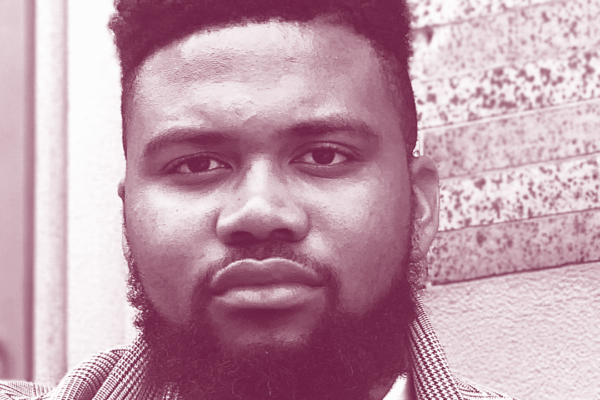
Nehemiah Bester is a Black man with short hair and a beard, and is wearing a sport jacket, collared shirt, and tie. Image has a burgundy and white gradient map color profile.
  • Civil Rights|
  • +7 Issues

Nehemiah Bester’s 12 Must-Reads of 2021

A collection from the ACLU of Maryland.
Debbie Jeon

Deborah Jeon

Legal Director
(she/her/hers)
Deborah Jeon is the Legal Director for the ACLU of Maryland, where she has spent more than three decades fighting for constitutional rights through state and federal litigation. She has led landmark cases that transformed Maryland law on voting rights, racial profiling, and government accountability—cases that reshaped how power operates in communities across the state. Debbie began her ACLU career in 1990 on Maryland's Eastern Shore, managing the organization's race and poverty legal work in counties where white resistance to racial equity had persisted for generations. That ground-level experience battling entrenched discrimination—in courtrooms, county councils, and community meetings—shaped her approach to civil rights advocacy. In 2005, she expanded her reach statewide as the ACLU's Legal Director, bringing the same combination of legal skill and strategic vision to fights across Maryland. Before joining the ACLU, Debbie clerked for U.S. District Judge Myron H. Thompson in the Middle District of Alabama—a judge known for courageous civil rights rulings in the heart of the former Confederacy—then practiced at a labor and civil rights law firm in Little Rock, Arkansas, working alongside communities fighting for economic and racial justice. A graduate of Yale Law School and Cornell University, Debbie also holds a master's degree in journalism and writes regularly about civil rights and civil liberties, translating complex constitutional issues into arguments that resonate beyond the courtroom. She currently serves on the Maryland Attorney General's Civil Rights Advisory Council and recently completed a federal court appointment to a committee revising rules on civil rights attorneys' fees—ensuring lawyers who take on constitutional fights can sustain that work. She is the recipient of the Maryland Daily Record's "Leadership in Law Award" and the Dr. Martin Luther King, Jr. "Dream Keepers' Award.”
Placeholder image

Gina Elleby

Associate Staff Attorney
(she/her/hers)
Gina Elleby (she/her) is an associate staff attorney with the ACLU of Maryland, where she has been a dedicated member of the team for over a decade. She is admitted to practice before state courts and the federal district courts in Maryland. A 2010 graduate of Howard University School of Law, Gina brings both deep institutional knowledge and an abiding commitment to community to her work. Gina came to legal work with a clear sense of purpose: to address the heavy toll of mass incarceration in her community. That calling shaped her early years at the ACLU of Maryland, where she developed expertise in administrative prison processes in support of what would become the ACLU of Maryland “Freedom Bus” initiative, as well as other cases across the organization's priorities. She also managed a robust legal request system that connected everyday people — whose lives had been upended by systemic oppression — to available legal mechanisms to address their harm, and led informal, out-of-court resolutions that delivered real relief without waiting for a courtroom. Before her legal career, Gina worked in art museums, protecting and amplifying visual art that recorded and resisted the social and political conflicts of its time — work that, not unlike civil rights law, insisted that history be seen, named, and reckoned with. Today, Gina looks forward to applying her skills and hard-won knowledge to criminal legal and immigration reform on behalf of the everyday people our systems should prioritize and serve.