
Written in collaboration with the ACLU of DC and ACLU of VA
Since the start of President Trump’s second term, immigrant communities across the District of Columbia, Maryland, and Virginia have been living with an immigration agenda once again defined by fear, intimidation, and aggressive federal enforcement. While these policies are often most visible in Washington, D.C., their consequences do not stop at the District line. In the DMV, where daily life crosses jurisdictional boundaries, immigration enforcement functions as a regional force, and so must the response.
Families in this region often live in one jurisdiction, work in another, and rely on schools, hospitals, and public services spread across both state and district borders. Federal agencies headquartered in Washington exert influence far beyond the District itself. When immigration enforcement escalates in D.C., it destabilizes communities across Maryland and Virginia as well, disrupting workplaces, separating families, and creating a chilling effect felt throughout the region.
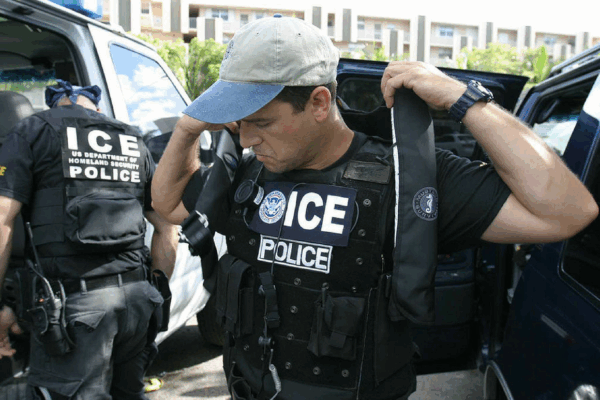
The Trump administration has made D.C. a focal point for highly visible immigration enforcement, including expanded ICE activity and federal deployments designed to send a message. That message is heard clearly across the DMV. No community is untouched, and no jurisdiction exists in isolation.
But the story of immigration in the DMV is not only about enforcement. It is also about resistance.
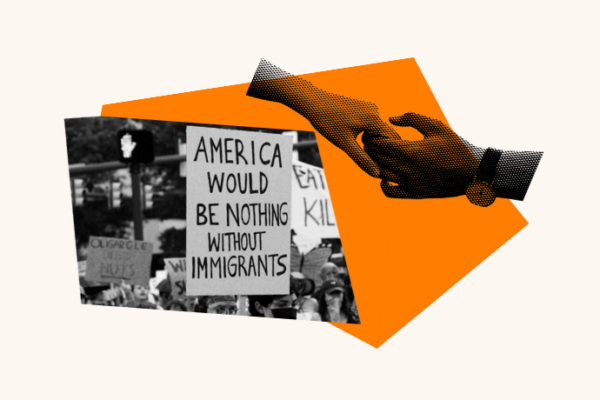
Across the region, immigrant communities and their allies are organizing to protect one another, assert constitutional rights, and demand accountability. The American Civil Liberties Union affiliates of D.C., Maryland, and Virginia are working in coordination to ensure people understand their rights, prepare for encounters with immigration authorities, and fight back – together.
What This Looks Like on the Ground
District of Columbia
The District is a testing ground for what Donald Trump hopes he can get away with across the country. According to the Washington Post, there have been more than 1,100 people in the District arrested by ICE since October with “more than triple the amount of ICE arrests in D.C. during the first seven months of the year” Every day, residents and visitors to D.C., including people who work in the District and are residents of the DMV, face a surge of federal agents. The people of the District have faced harassment, arrest, and detention as they go about their daily lives at work, at school, and in their neighborhoods. This has been particularly true in neighborhoods with significant immigrant populations.
But we are not powerless. In September, ACLU-DC and co-counsel sued the administration on behalf of four residents and the national immigration organization CASA, challenging the administration’s policy and practice of making civil immigration arrests without a warrant. The law permits such arrests only if arresting officers have probable cause that the person has committed a violation of immigration law and is a flight risk, but we documented agents’ repeated failure to meet these standards, showing that the resulting arrests violate federal immigration law.
In December, a federal court ruled in our favor, temporarily halting the administration’s practice.
As this surge of agents into our neighborhoods has occurred, ACLU-DC has distributed more than 20,000 Know Your Rights cards–in English, Spanish, French, and Amharic—to help residents and visitors stay safe.
Maryland
In Maryland, the consequences of renewed federal immigration enforcement are both measurable and deeply personal. Through the first nine months of President Trump’s second term, ICE made more than 3,200 arrests in Maryland, nearly three times the total from the same period last year. Just over half of those arrested had no criminal history, underscoring that enforcement is sweeping up long-standing community members, not just people with serious convictions.
One of the most alarming examples is the case of Kilmar Ábrego García, a Maryland resident who was wrongly deported in 2025 despite a legal determination that returning him to El Salvador would put his life at risk. His case sparked widespread outrage and legal action, highlighting how quickly due process can collapse under aggressive enforcement.
At the same time, Maryland communities have demonstrated the power of organized resistance. In Wicomico County, sustained advocacy by immigrants, faith leaders, and local residents successfully stopped a proposed 287(g) agreement that would have deputized local law enforcement to carry out ICE functions. These efforts show that while federal enforcement casts a wide net, community action can still draw meaningful limits and protect fundamental rights.
Virginia
In 2025, Virginia saw one of the largest increases in immigration arrests in the country: up 358 percent, with an average of 20 Virginians arrested every day.
Two-thirds of Virginia’s immigrants live in Northern Virginia. To the Trump administration, the region might seem like a convenient target, close to the White House. But there is no acceptable reason to break apart families and “disappear” Virginians, least of all for a political agenda.
Our staff have filed four different lawsuits on behalf of immigrants impacted by the Trump administration’s anti-immigrant agenda in Virginia, and we’ve held more than 30 Know Your Rights workshops in multiple languages for interacting with ICE and the police.
Virginians know that immigrants have always been an indispensable part of the Commonwealth, and together, we’re committed to making sure Virginia is safe – for ALL of us.
Knowing Your Rights Is a First Line of Defense
In moments of heightened enforcement, accurate information can be lifesaving. Everyone, regardless of immigration status, has constitutional rights. You have the right to remain silent. You do not have to consent to a search. You do not have to open the door to your home unless officers present a valid judicial warrant signed by a judge.
Preparedness is not panic. Across the DMV, communities are hosting Know Your Rights trainings, distributing multilingual resources, and building rapid-response networks so that when enforcement happens, people are not left to face it alone. These efforts reduce harm, prevent unlawful conduct, and empower people to stand up for themselves and their neighbors.
Why Regional Organizing Matters Now
The Trump administration’s immigration strategy relies on intimidation and fragmentation, on the belief that communities will feel isolated or too afraid to act. But the DMV is interconnected – not isolated.
What happens in D.C. affects Maryland and Virginia. What communities build together across the region can shape how these policies are resisted and whether constitutional rights are upheld.
The DMV is a shared ecosystem of families, workers, and communities whose lives are deeply intertwined. Immigrant communities here are not passive targets of federal policy. They are neighbors, caregivers, essential workers, and leaders organizing for dignity, safety, and justice. In the face of aggressive immigration enforcement, they are proving the power of knowledge, solidarity, and coordinated resistance.