
After more than a decade of organizing, advocacy, and relentless action by impacted communities across Maryland, the General Assembly has passed SB 791, the Community Trust Act. This bill is a landmark step toward ensuring that all Marylanders, regardless of immigration status, can live and work freely without fear. The passage of this bill is a direct result of consistent advocacy and organizing led by the directly impacted families, coalitions, and advocates who showed up week after week, making calls, sending emails, and demanding that their lawmakers be brave. It is a testament to the power of cross-community, people-driven organizing that has reshaped what is politically possible in this state.
The Community Trust Act addresses a critical gap in Maryland’s protections for immigrant communities. While banning 287(g) programs ended formal law enforcement agreements with ICE, the vast majority of Maryland’s collaboration with ICE has always been informal and just as dangerous. In the past year alone, nearly 5,000 Marylanders were arrested by ICE, a threefold increase, with 1 in 3 arrests stemming from voluntary local collaboration. SB 791 sets limits on how law enforcement can informally collude with ICE, protects people who are innocent or have yet to be convicted of a crime from notification and transfer to ICE without a court order or a judicial warrant, and bans the unconstitutional practice of holding people who are released from local correctional facilities past their release date for the purposes of immigration enforcement without a judicial warrant.
Rooted in the ACLU of Maryland’s mission to uplift the humanity of every Marylander, we will continue fighting to fully disentangle Maryland’s legal system from immigration enforcement and ensure our communities are protected by the law rather than targeted by it. As emergency legislation, the Community Trust Act takes effect upon the Governor’s signature, and we call on Governor Moore to sign it immediately, so these essential protections reach the people who need them without delay.
Related Issues
Related Content

The Truth About the Community Trust Act: Myths vs. Facts
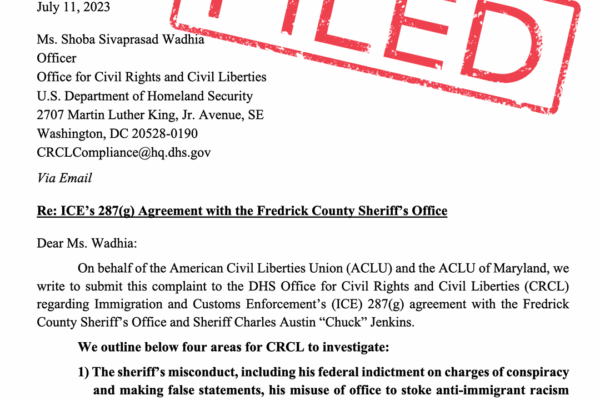
Federal Complaint to End Frederick County 287(g) Agreement

ACLU Maryland Statement on DHS Purchase of Hagerstown Warehouse for ICE Facility

Know Your Rights: Interacting with ICE in the DMV
Stay Informed
Sign up to be the first to hear about how to take action.
By completing this form, I agree to receive occasional emails per the terms of the ACLU’s privacy statement.
By completing this form, I agree to receive occasional emails per the terms of the ACLU’s privacy statement.