
BALTIMORE, MD - In a groundbreaking decision, a federal judge ruled Friday that an American Civil Liberties Union (ACLU) of Maryland lawsuit on behalf of individuals serving life sentences for offenses committed as youth must be permitted to move forward, rejecting the State's motion to dismiss the case.
"For years, lifers and their families have tried to get the state to live up to the promise of second chances that a parole-eligible sentence is intended to provide," said ACLU Staff Attorney Sonia Kumar. "This ruling is a real step forward in that struggle."
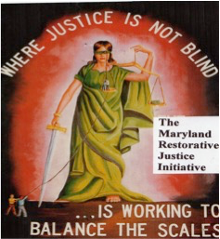
The ACLU represents the Maryland Restorative Justice Initiative, a prisoners' rights organization that includes juvenile lifers and their families among its members, as well as three individuals subjected to mandatory life sentences for offenses committed decades ago when they were teens. The lawsuit, MRJI v. Hogan, alleges that no juvenile lifer has been paroled in more than two decades as a result of Maryland's unconstitutional system.
"Judge Hollander's decision to allow this lawsuit to move forward on behalf of Marylanders serving life after being sentenced as juveniles is very important," said Walter Lomax, director of the Maryland Restorative Justice Initiative. "We look forward to the chance to present our full case in court, and hope to ultimately remove politics from the process, so that those sentenced as youth have a real chance at release."
Although the ACLU's plaintiffs are serving "life with parole" sentences, the lawsuit argues that, in practice, Maryland never paroles lifers, instead operating a system of executive clemency in which commutation of life sentences is extraordinarily rare, in part because Maryland is one of only three states in the country that gives the Governor exclusive authority and unfettered discretion to reject any lifer's application for parole. In this way, Maryland converts "life with parole" sentences into de facto "life without parole" sentences that constitute cruel and unusual punishment for individuals sentenced as youth under Supreme Court precedent.
At a January 4 hearing, the State urged the Court to dismiss the case, arguing it was without legal merit. Family members of individuals serving parole-eligible sentences filled the courtroom beyond capacity to witness the arguments and support the plaintiffs.
Within just weeks of the hearing, U.S. District Court Judge Ellen Lipton Hollander rejected the State's effort to derail the challenge. In a lengthy opinion tracing the history of Maryland's parole scheme and the plaintiffs' allegations, Judge Hollander observed:
"A parole procedure does little in the way of actually making parole a possibility when the decision of whether to commute a sentence is entirely up to [the governor's] discretion and the political tides of the day. And, a system of executive clemency, which lacks governing standards, does not constitute a meaningful opportunity to obtain release for Juvenile Offenders. ..."
In ruling that the case can go forward, the judge held that "[a]t this stage of the proceedings, plaintiffs have sufficiently alleged that Maryland's parole system operates as a system of executive clemency, in which opportunities for release are ‘remote,' rather than a true parole scheme in which opportunities for release are ‘meaningful and ‘realistic,' as required by [the Supreme Court.]"
The plaintiffs are represented by pro bono attorney Barry Fleishman of the Washington, D.C. office of Shapiro, Lifschitz & Schram, as well as ACLU of Maryland Legal Director Deborah Jeon and Staff Attorney Sonia Kumar.
###
Related Content
Settlement Reached in Lawsuit Defending Constitutional Rights of Marylanders Sentenced to Life with Parole as Children

New Thinking Freely Podcast Episode “Racism, Algorithms, and the Fight for Redemption” from the ACLU of Maryland


Dara Johnson
Stay Informed
Sign up to be the first to hear about how to take action.
By completing this form, I agree to receive occasional emails per the terms of the ACLU’s privacy statement.
By completing this form, I agree to receive occasional emails per the terms of the ACLU’s privacy statement.