
News & Commentary

Latest Event
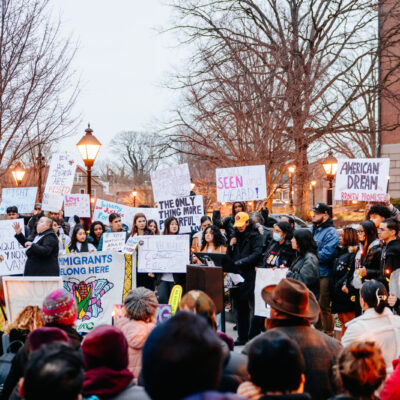
Statewide Teach In: How We End Maryland Collusion with ICE
We ended 287(g). So what’s next?
Join our teach-in to break down the Community Trust Act, why ending ICE collusion protects our neighbors and public safety, and how we keep the pressure on our legislators. We’ll hear from guest speakers and leave space for Q&A, giving you the opportunity to ask your burning questions!
Click HERE to send a message to your legislator!
See you there!

Because Incarcerated People Matter: ACLU-MD Concerns with the 2020 Census Proposal
By Michael Abrams

OpEd: Building a more equitable Port Covington
By Barbara Samuels, Attorney Managing ACLU of Maryland's Fair Housing Advocacy"We will build it together"' is the Port Covington claim. Indeed, with
By Barbara Samuels
Port Covington TIF - Equity Now
The ACLU of Maryland and Public Justice Center have joined forces to submit comments and recommendations on the proposed Port Covington Master Plan to the Baltimore City Department of Planning. Read our comments.‘We will build it together...' is the Port Covington claim. What we should be building is a 21st Century model for the nation of how an old, rust belt, racially and economically segregated city can create a brand new racially and economically diverse community and an economic engine that generates inclusive growth and shared prosperity. We should show that Baltimore has learned a hard lesson: that the existence of "two Baltimores" - one empowered, wealthy and thriving, the other still redlined and marginalized - is not sustainable.As it stands now, the Port Covington Master Plan is a prime example of structural inequality on a massive scale. Our combined areas of concern include transportation and a lack of inclusive affordable housing, diverse commu
OPED in Washington Post: Maryland has started on prison reform. But what about the thousands in jails?
This year, Maryland experienced the beginning of a historic shift from a failed tough-on-crime approach that has swelled our prisons - mostly with poor black and brown people - and emptied our coffers, toward a smarter, evidence-based and more humane approach to justice. That new approach promises to reduce the incarcerated population, reduce recidivism by giving people returning to their communities from jail or prison the support they need to avoid future entanglement with the criminal-justice system and reduce the unconscionable racial and socioeconomic biases that permeate and delegitimize our justice system.
By Toni Holness

On what's "reasonable" and the breakdown of police discipline
Although all eyes are understandably focused on Officer William Porter's guilt or innocence related to Freddie Gray's death, the defense case last week featured disturbing testimony from senior Baltimore Police commanders that should not be overlooked, regardless of the outcome of the trial. Former Baltimore Police Col. Timothy Longo testified that it was reasonable for Porter to be afraid of Freddie Gray, whose legs were shackled, whose hands were cuffed behind his back, and who had not attacked or threatened Porter. In fact Longo claimed that it was "objectively reasonable" for Porter to be so afraid that he could ignore the Department's General Orders requiring detainees to be put in a seatbelt in the transport van. This is - or should be - unbelievable. Equally shocking, Justin Reynolds, a current Baltimore Police Captain, took the witness stand and proclaimed that the police department's General Orders are not actually orders that must be followed, but just suggestions that officers can ignore.In every other circumstance, BPD holds out its General Orders as essential policies that govern police conduct and protect both citizenry and police. In this case, had Freddie Gray been properly belted in according to police protocol, he would not have suffered the catastrophic injury that ended his life.If senior police officials view this fear of Freddie Gray as reasonable, then the standard is completely meaningless, and it is hard to imagine any circumstance in which police officers' fears, however irrational, are not justified. And if this "reasonable" fear is itself a basis for ignoring the rules that are supposed to govern police behavior, then ... there are no rules for police? Even when someone dies as a result?No wonder so many people, particularly the Black and Brown people who are far more likely to be regarded by police as inherently suspicious and to be subjected to police misconduct, don't trust police to police themselves when accused of misconduct and excessive force. And if this is the testimony of BPD officials - a police department governed not by rules, but the whims and implicit bias of officers - then we really shouldn't trust the police to investigate themselves and claim that the system will take care of the "few bad apples." As a system, police discipline is broken. Maryland needs real police accountability reform and we need it now.
Stay Informed
Sign up to be the first to hear about how to take action.
By completing this form, I agree to receive occasional emails per the terms of the ACLU’s privacy statement.
By completing this form, I agree to receive occasional emails per the terms of the ACLU’s privacy statement.