
BEL AIR, MD – In a historic victory for students, educators, and families across Maryland, the ACLU of Maryland and the Maryland State Education Association secured a landmark ruling Thursday in Harford County Circuit Court protecting access to Flamer, a young adult graphic novel at the center of a case with significant implications for intellectual freedom across Maryland. The decision marks the first court ruling interpreting Maryland’s Freedom to Read Act, affirming critical protections for students’ freedom to read and access to diverse stories and perspectives.
In a courtroom filled with parents, community members, advocates from Together We Will and the Harford County NAACP, and supporters of the freedom to read, the judge delivered a ruling from the bench upholding the Maryland State Board of Education’s decision to restore Flamer to Harford County school libraries.
The victory follows months of determined advocacy by local parents, educators, students, and community members who organized to protect students’ access to literature and ensure that school library decisions reflect the standards and safeguards established by Maryland law and the First Amendment. Leslie Thompson, parent of two students in Harford schools, led the charge to defend the State Board’s decision in Court.
“The court’s ruling is a victory for the freedom to read and for Maryland communities whose voices were heard,” said Sonia Kumar, Senior Staff Attorney at the ACLU of Maryland. “This historic decision affirms the promise of Maryland’s Freedom to Read Act and the First Amendment: students deserve access to books that reflect the richness of our experiences, identities, and perspectives, free from censorship. From the community members who raised their voices to the advocates who filled the courtroom, this victory belongs to everyone who believes in the power of books to educate, inspire, and foster understanding.”
The case arose after a parent sought removal from all Harford school libraries of Flamer, a semi-autobiographical graphic novel by Mike Curato that follows a Filipino American teenager navigating identity, belonging, and self-acceptance at a Boy Scout camp over the summer before he enters high school. In accordance with the Freedom to Read Act, a local review committee composed of parents, school personnel, and students carefully reviewed the book in accordance with local school system policy—reading the book in its entirety, assessing its age-appropriateness, and considering the parent’s objections. At the conclusion of this process, they unanimously recommended retaining the book in Harford County school libraries. The superintendent supported that recommendation.
As the judge noted in court, the Harford County Board of Education’s bare review stood in stark contrast. The Board voted 5-3 during a closed-door proceeding to remove the book from all school libraries. Following an appeal by community members, the Maryland State Board of Education reversed that decision, finding that the local board acted arbitrarily when it ignored the review committee’s thoughtful findings and the superintendent’s recommendation without reading the book or providing any reasoned explanation.
The local board challenged the State Board’s decision in Circuit Court, leading to Thursday’s landmark ruling.
“This victory demonstrates what is possible when communities come together to protect the rights of young people,” said parent Leslie Thompson, who defended the case in court. “Parents, students, and educators brought their voices, their conviction, and their commitment to ensuring that school libraries remain places of learning, discovery, and belonging. This decision honors that collective effort and reinforces the importance of community participation in decisions that shape our children’s education.”
Enacted in 2024, Maryland’s Freedom to Read Act established critical protections and review procedures to protect against unlawful censorship of school library materials. The law was passed to combat a national and local surge in attempts to ban books in schools, particularly those exploring race, identity, sexuality, and the experiences of historically marginalized communities.
As the first court decision interpreting the law and rejecting the local Board’s claim that it was not bound by the law, Thursday’s ruling represents a significant development in ensuring the law’s protections are meaningful.
“Yesterday, the Board argued that it could ban any book it wanted based on its ‘collective wisdom,’ but that is not the law in Maryland,” said Erika Jacobsen White, Principal of Joseph Greenwald & Laake, P.A., who argued the case on behalf of Leslie Thompson and the ACLU of Maryland. “Judge Curtin applied the correct standard of review and concluded that the conduct by the Board was arbitrary, unreasonable, and illegal. As Justice Brennan noted for the plurality of the Supreme Court noted in Island Trees School District v. Pico, part of teaching citizenship requires that, ‘we not strangle the free mind at its source and teach youth to discount the important principles of our government as mere platitudes.’ Flamer will remain on the shelves, and the rule of law prevailed.”
The ACLU of Maryland celebrates this victory alongside the Maryland State Education Association, Joseph Greenwald & Laake, P.A., and the Harford County community members whose advocacy brought this case forward.
The decision sends a powerful message across Maryland: the freedom to read is worth protecting, community voices matter, and every student deserves the opportunity to explore stories that expand their understanding of themselves and the world.
Related Issues
Related Content

Circuit Court to Hear Arguments in Harford County School Board Challenge Over Young Adult Novel “Flamer”
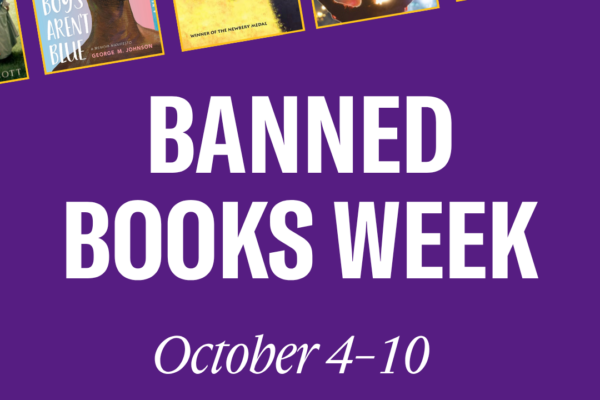
The Banned Books That Helped Shape Who We Are
Coalition Appeals to State Board of Education to Strike Down Somerset County’s Unconstitutional Book Ban
Stay Informed
Sign up to be the first to hear about how to take action.
By completing this form, I agree to receive occasional emails per the terms of the ACLU’s privacy statement.
By completing this form, I agree to receive occasional emails per the terms of the ACLU’s privacy statement.