
Police Practices
The ACLU of Maryland has fought for decades against police abuse and for policing that is equitable, transparent and democratic. In the courts, in city halls, in the legislature, the ACLU of Maryland has challenged racial profiling, broken-windows policing and police surveillance.
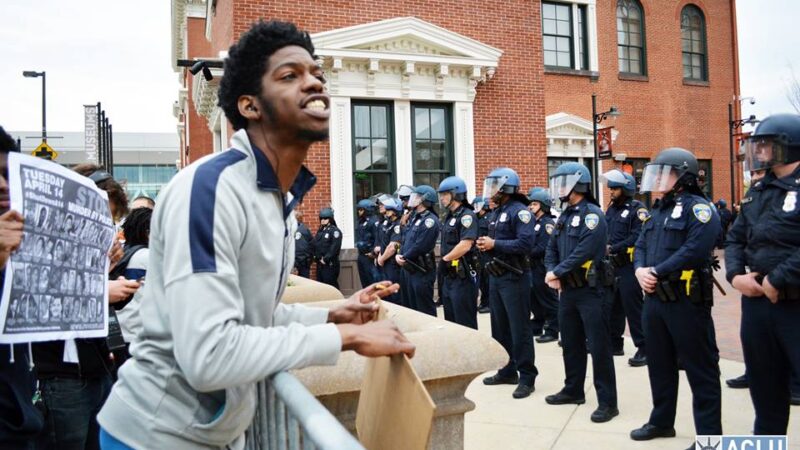
Our laws give police officers extraordinary authority. They have the power to stop members of the public from going about their normal lives, search them, arrest them and charge them with a crime, use force on them, and even kill them. With these extraordinary powers should come extraordinary responsibility to use them only within the confines that the law allows. When police abuse their authority, they can, and do, cause extraordinary harm.
The ACLU of Maryland has fought for decades against police abuse and for policing that is equitable, transparent and democratic. In the courts, in city halls, in the legislature, the ACLU of Maryland has challenged racial profiling, broken-windows policing and police surveillance. We have fought for the public's right to know about police, from access to body camera footage and department's determinations about alleged misconduct to the policies and safeguards governing surveillance technology and practices. And we were instrumental in establishing that the public has the First Amendment right to film and record police carrying out their duties.
The ACLU of Maryland continues to work to ensure:
Police must be transparent, accountable and responsive to the communities they serve. The ACLU of Maryland has worked to ensure the public has access to information about police misconduct and discipline, and has worked to reform the Law Enforcement Officers Bill of Rights, a state statute that operates as a systemic barrier to oversight of policing by residents and to effective discipline in Maryland.
Police must treat all people and communities fairly and equally, regardless of race, ethnicity, national origin, religion, gender identity or expression, sexual orientation, or mental or physical disability.
Police must use their authority consistent with the constitution and must be accountable to the communities they serve. Police should focus on serious crime and should not be tasked with addressing noncriminal issues such as people with mental illness, homelessness, or immigration issues. Police should end ineffective "broken windows" policing and abusive stop-and-frisk policies.
Surveillance technology should not be acquired or deployed by police agencies without public knowledge and informed debate.
ACLU BRIEFING PAPER ON DEATHS IN POLICE ENCOUNTERS IN MARYLAND
The Latest

Maryland Immigrant Rights Coalition Sues ICE Over Warrantless ‘Arrest First, Ask Questions Later’ Policy

They called for help. The system called their deaths inevitable.
ACLU of Maryland Releases Years-Long Database and Report on Police Killings in Maryland
Cases, Campaigns & Legislation
HB 325 / SB 446 - Criminal Law - Use or Possession of a Controlled Dangerous Substance - De Minimis Quantity
SB 128 - Criminal Law - Possession With Intent to Distribute Marijuana - Rebuttable Presumption
Stay Informed
Sign up to be the first to hear about how to take action.
By completing this form, I agree to receive occasional emails per the terms of the ACLU’s privacy statement.
By completing this form, I agree to receive occasional emails per the terms of the ACLU’s privacy statement.