News & Commentary
Make Your Voice Heard at the “Kirwan Commission” Public Hearing
Here are some tips from Caylin Young, Public Policy Counsel at ACLU of Maryland:Keep your comment brief, efficient, and on topic.Introduce yourself and give your affiliation, such as student, parent, community advocate. Tell the Commission which county you are from and the name of your school (if applicable).Identify 3 main points maximum for your comment. You can break down each point, but stick to 3 main ones.Structure your comment by telling the Commission what you are going to tell them, tell them, and then tell them what you told them.Tell a personal story that is relevant to the specific point you are trying to address. A personal story will maximize your effectiveness.Thank the Commission and provide your contact information along with a few printed copies of your written testimony.Submit an electronic copy of your comment in advance of the hearing.Double-check details for submitting your public comment to make sure you have checked off everything on the list of instructions.Practice, practice, practice! Practicing saying your comment will not only build confidence, but will help you keep it within the allotted timeframe (3 minutes!). They may cut you off if you go over.Relax and don’t forget to breathe!Time to flex your advocacy muscles! Thank you for making your voice heard.Stay updated on the Kirwan Commission, get action alerts, and other critical education news. Sign up to get our Education Advocate newsletter in your inbox.

Race Equity Must Be a Key Priority for the Kirwan Commission
TAKE ACTIONClosing racial gaps is urgent, and race equity must be a key priority in our discussions about changes to Maryland’s education system. Take action: Tell the “Kirwan” Commission you support strong and effective recommendations to further race equity.
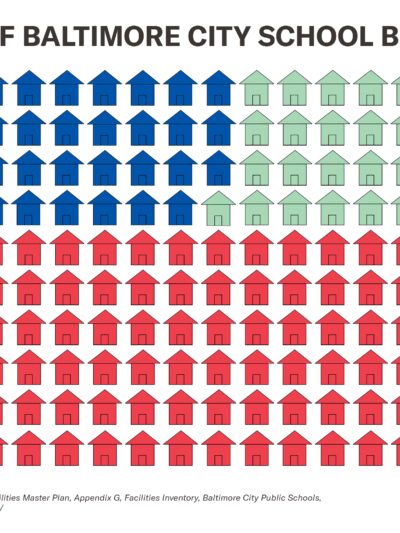
Baltimore’s School Facility Crisis: No Air Conditioning, No Heat, No Excuses
By Frank Patinella
Who are the “Kirwan” Commissioners?
William E. (Brit) Kirwan, Ph.D.Appointed by: Senate President Thomas Miller, Jr.Commission Chair (chosen by Governor, Senate President & House Speaker); Dr. Kirwan is the Chancellor Emeritus of the University System of Maryland. David M. Steiner, Ph.D.Appointed by: GovernorDr. Steiner is Director of the Johns Hopkins Institute for Education Policy and Professor of Education at Johns Hopkins University. Scott DorseyAppointed by: GovernorMr. Dorsey is Chairman of the Board and Chief Executive Officer at Merritt Properties, LLC. Senator Nancy J. KingAppointed by: Senate President Thomas Miller, Jr.Nancy King is a Democratic State Senator representing District 39 in Montgomery County. She serves at the Senate Chair of the Joint Committee on Children, Youth and Families. Richard S. Madaleno, Jr.Appointed by: Senate President Thomas Miller, Jr.Rich Madaleno is a Democratic State Senator representing District 18 in Montgomery County. He serves on
By Nicole McCann
What is the P.R.O.P.E.R. Way to Educate Black Students?
Dr. Ivory Toldson addresses the “Kirwan” Commission on what Black students need to succeed.
By Nicole McCann
ACLU Education Reform Project Releases Legislative Priorities for the Maryland General Assembly of 2017
Ensure Full and Adequate Funding of Public Education – The ACLU of Maryland’s (ACLU-MD) Education Reform Project will fight to protect education funding and strengthen the education funding formula.
By Bebe Verdery, Frank Patinella, Kimberly Humphrey, Esq., Justin Nalley
OpEd: Building a more equitable Port Covington
By Barbara Samuels, Attorney Managing ACLU of Maryland's Fair Housing Advocacy"We will build it together"' is the Port Covington claim. Indeed, with
By Barbara Samuels
Port Covington TIF - Equity Now
The ACLU of Maryland and Public Justice Center have joined forces to submit comments and recommendations on the proposed Port Covington Master Plan to the Baltimore City Department of Planning. Read our comments.‘We will build it together...' is the Port Covington claim. What we should be building is a 21st Century model for the nation of how an old, rust belt, racially and economically segregated city can create a brand new racially and economically diverse community and an economic engine that generates inclusive growth and shared prosperity. We should show that Baltimore has learned a hard lesson: that the existence of "two Baltimores" - one empowered, wealthy and thriving, the other still redlined and marginalized - is not sustainable.As it stands now, the Port Covington Master Plan is a prime example of structural inequality on a massive scale. Our combined areas of concern include transportation and a lack of inclusive affordable housing, diverse commu

Stay Informed
Sign up to be the first to hear about how to take action.
By completing this form, I agree to receive occasional emails per the terms of the ACLU’s privacy statement.
By completing this form, I agree to receive occasional emails per the terms of the ACLU’s privacy statement.